
Sept 99: Samuel L. Jackson's Actor's Workshop
|
Sept 99: Samuel L. Jackson's Actor's Workshop |
| (September: Main Page * Features * Reviews * Gallery ) Current Issue * Archive |
|
Samuel L. Jackson's Actor's Workshop
written and compiled by Nasser Metcalfe 
It has been said that adversity breeds character. If this is so, then it stands to reason that Samuel L. Jackson has emerged as one of Hollywood's most diverse actors. His range and ability lends itself to the various characters that he has made all too real for us over the years. However, his road to success has been a bumpy one. Jackson first discovered his affinity for the stage while attending the prestigious Morehouse College. One of his professors was directing a production of "Three Penny Opera" and offered his students extra credit if they auditioned. Sam did so and found his life's calling. Since then, he has worked his way up the ladder of success one rung at a time. He met his wife, LaTonya in the theatre department while in college. After graduation the couple moved to New York to pursue their respective acting careers. The challenges were many and varied. Sam made a name for himself on the New York theatre scene. He developed a reputation as a powerful actor and managed to work fairly regularly. He eventually began to act in movies, lending his unique talents in various supporting roles. Samuel L. Jackson allowed himself to fall into one of the most common pitfalls of show business(drug abuse. With the support of his family, which now includes his wife LaTonya and her daughter Zoe, Jackson entered a rehab program. After completing the program successfully, Sam gave the performance of a lifetime and created a turning point in his film career. After appearing in several of Spike Lee's previous films, Samuel teamed up once again with acclaimed director and fellow Morehouse man on Jungle Fever. Ironically enough, Sam's character, Gator, was addicted to crack cocaine. Having recently overcome his own substance abuse challenge, he was able to deliver a strong, layered performance. The critics agreed and Hollywood discovered Samuel L. Jackson. His performance as Jules Jackson, the Bible quoting hitman in the hit movie Pulp Fiction earned him an Oscar nomination. Today, Samuel L. Jackson is one of the most sought after actors in Hollywood. He has established himself as a bankable star that always delivers. On Friday August 6, 1999, Samuel L. Jackson conducted the actors' workshop for the Urban World Film Festival in New York City. Blackfilm.com was there as he shared some of his insight on the industry and his insider perspective as well as practical advice for the struggling actor. The following excerpts are some of the highlights.
Unbeknownst to [director, Spike Lee], at the time I was kind of living that life. Doing my own kind of mad existence. Feeling sorry for myself kind of thing. And in the process I ended up going to rehab before the movie was shot. And I had to keep calling Spike from rehab and telling him "I'm in rehab but I'll be there. I've done the research." It was a funny kind of thing. By the time I was out of rehab, about a week or so later I was on set and we were ready to start shooting. I basically didn't need any make-up because I was still detoxing. And it would have been very easy to make the choice to play the addiction. But fortunately for me, while in rehab I did this really great self-study. I found out about how addicts destroy their relationships. And how they manipulate the people around them to continue to live the way that they do. And I decided that was what I wanted to do with the character. I had some interesting conversations with Spike. And he said "O.K., well go ahead and do what you feel like doing." And I was able to do all those things and work those relationships and do the manipulation.
I have a group of managers. Then I have my agents at ICM. Then I have my lawyer and accountant. So it's a group of people. And we make decisions sometimes by committee. But I have a rule that we have full disclosure. If they read something, they have to let me read it. Or if I read something, I give it to them. Because scripts come from everywhere, so they don't get to make decisions about "I didn't like that so I'll pass on it." because they don't necessarily have the sensitivity to understand everything I want to do. So if I read something that I like that they don't like, it's not about them liking it. It's about them finding a way to make that work because I want to do it. So ultimately, everybody knows that they work for me and that I don't work for them. A lot of times because we're just actors, we don't always understand business things. So if you have an agent, an agent is not going to tell you that you should have a manager. For a long time I resisted having a manager because to me it just sounded like 'That's 15% of my money. And I'm already giving you 10% of my money so that's like 25% of my money gone before I even see it.' But 25% of nothing is nothing. And a lot of times those managers keep their foot in those agents' butt. And sometimes managers know people that the agents don't know. They know writers, directors, studio heads, whatever. So if you can get a manager that is legitimate, who is really in your corner and wants you to work, then they're good people to have. Because that 25% or that 15 % that you give them, they're going to make sure that you get enough money where you don't miss it any way. So take care of the business. |
| (September: Main Page * Features * Reviews * Gallery ) Current Issue * Archive |

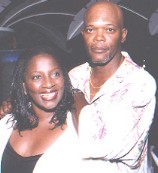 I made a decision to go into the drama department because that was the most comfortable place that I had
been. It was one of the few places that I didn't mind getting up and going to class. I spent all day in the theatre building sets, hanging lights, and doing whatever we had to do. Then we rehearsed at night. Then I got involved with another theatre company called the "Black Image Theatre Company" which was a kind of revolutionary street theatre at the time. My wife hates for me to refer to it as the "Hate Whitey" theatre but essentially that's what it was. Once I made the decision, we did it all the time. We would get to the theatre at 7a.m. and stay sometimes until 3 in the morning.
I made a decision to go into the drama department because that was the most comfortable place that I had
been. It was one of the few places that I didn't mind getting up and going to class. I spent all day in the theatre building sets, hanging lights, and doing whatever we had to do. Then we rehearsed at night. Then I got involved with another theatre company called the "Black Image Theatre Company" which was a kind of revolutionary street theatre at the time. My wife hates for me to refer to it as the "Hate Whitey" theatre but essentially that's what it was. Once I made the decision, we did it all the time. We would get to the theatre at 7a.m. and stay sometimes until 3 in the morning.
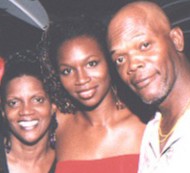 By the time we made our decision to move to New York, everybody in New York was working. It was a great
time. It was a very healthy, artistic atmosphere during that time. Everybody saw each other. We'd walk together from audition to audition. We went to see each other's shows. We socialized together. It wasn't the kind of competition that I see going on in L.A. I kind of see L.A. as this kind of adversarial atmosphere. So those of you who plan on going out there, it's very different from being in an atmosphere like this one that's very supportive, because you actually know these actors. We talked to each other. We read plays together. We socialized together. L.A. is very adversarial. Number one, because it's a car society. And New York is a mass transit society. So you get on the train and invariably would run into somebody you knew who was going to an audition (possibly the same audition that you were attending). We were constantly in contact. But in L.A. people only see each other when they go to auditions. You're in your car and you're by yourself. You get to the audition and you look at the person across from you who is auditioning for the same role. You don't talk to each other. And if it's an actor that gets most of the roles you really don't want to see him. And they don't have the same kind of sharing atmosphere that we had in New York. If I went to an audition and I knew I wasn't going to get the job, I'd tell four other people. I don't think that happens in L.A.
By the time we made our decision to move to New York, everybody in New York was working. It was a great
time. It was a very healthy, artistic atmosphere during that time. Everybody saw each other. We'd walk together from audition to audition. We went to see each other's shows. We socialized together. It wasn't the kind of competition that I see going on in L.A. I kind of see L.A. as this kind of adversarial atmosphere. So those of you who plan on going out there, it's very different from being in an atmosphere like this one that's very supportive, because you actually know these actors. We talked to each other. We read plays together. We socialized together. L.A. is very adversarial. Number one, because it's a car society. And New York is a mass transit society. So you get on the train and invariably would run into somebody you knew who was going to an audition (possibly the same audition that you were attending). We were constantly in contact. But in L.A. people only see each other when they go to auditions. You're in your car and you're by yourself. You get to the audition and you look at the person across from you who is auditioning for the same role. You don't talk to each other. And if it's an actor that gets most of the roles you really don't want to see him. And they don't have the same kind of sharing atmosphere that we had in New York. If I went to an audition and I knew I wasn't going to get the job, I'd tell four other people. I don't think that happens in L.A.
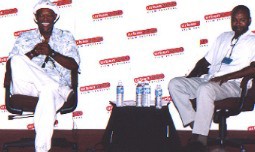 My first big film where I mistakenly thought I was off and running on my way to Hollywood was Ragtime. I was gang member #3. That was one of the first rude awakenings I got about the film business itself. I was sitting there. At that time you had to go to interview before you got to audition. They would talk to you first to see who you were, what you were doing before they let you audition. Then they'd call you back to audition. I was sitting there waiting to go in and meet [director] Milos Foreman. And at the time, James Earl Jones was the most famous black actor in America. And next thing I know, James Earl Jones came in. And I was like 'Aw man, he must be here to play Booker T. Washington or some other prominent role in the script'. And he sat down next to me and we started talking. I found out that he was there for an interview. And I was like 'Wait a minute, you're James Earl Jones. You did The Great White Hope and all this stuff.' Yet there he was doing the same thing I was doing this. And immediately I knew 'O.K. I'm going to have a specific place and this is what it's going to be.' He didn't have 90 scripts sitting on his doorstep where he could just reach in a pile and say "I'm going to do this now". And neither do I. That's the reality of it. You'll be fighting the same battle forever.
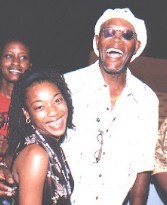 There's always the process of making the character have a whole life. Through [Black theatre icons]Lloyd Richards and Douglass Turner Ward, I learned how to ask myself specific questions that help me create a whole character. This is the business of make-believe. And unless someone has written a novel or is a real life person that you can research, then you have all kinds of freedom to do anything you want to do. You can sit down and make up a birthday. You can make up a birthplace. You can make a family background. Whether he was educated, not educated. Was he poor, was he rich, was he middle class? What kind of food did he eat? What kind of friends did he have? That's the process.