Rabbit-Proof Fence
|
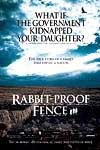 |
| Distributor: |
Miramax |
| Director: |
Phillip Noyce |
| Producer: |
Phillip Noyce, Christine Olsen, & John Winter |
| Screenwriter: |
Christine Olsen, based on the book “Follow the Rabbit-Proof
Fence” by Doris Pilkington Garimara |
| Music: |
Peter Gabriel |
| Cast: |
Everlyn Sampi, Tianna Sansbury, Laura Monaghan,
Kenneth Branagh, & David Gulpilil |
| Running Time: |
94 min |
|
Often we see countless films, whether it is on the big or small screen,
where the pursuit for freedom comes in many ways. There have been plenty
of stories about freedom from oppression, freedom from poverty, and  freedom
from slavery. Many races (Native-American Indians, African-Americans,
and Jews) have had parts of their stories told. One story that hasn’t
been told is that of the Aborigine. Much of what we have seen on the big
screen has been in commercial films such as “Crocodile Dundee”. Here comes
a film that is true, emotionally powerful, and one of the year’s best.
Based on the biographical book by Doris Pilkington, and directed by Phillip
Noyce, RABBIT-PROOF FENCE is an amazing story of intelligence, strength,
and conviction that will tug at your heart. freedom
from slavery. Many races (Native-American Indians, African-Americans,
and Jews) have had parts of their stories told. One story that hasn’t
been told is that of the Aborigine. Much of what we have seen on the big
screen has been in commercial films such as “Crocodile Dundee”. Here comes
a film that is true, emotionally powerful, and one of the year’s best.
Based on the biographical book by Doris Pilkington, and directed by Phillip
Noyce, RABBIT-PROOF FENCE is an amazing story of intelligence, strength,
and conviction that will tug at your heart.
When European settlers first arrived in Australia, there was an almost
immediate conflict between the recent arrivals and the nation's indigenous
people, whose  rich
cultural heritage which bore little resemblance to that of the Europeans.
By the mid-19th century, when white settlers had gained political control
of the continent, many aborigines found themselves removed from their
lands and their children taken from them, under the belief that the youngsters
would be better off in a more "civilized" environment. Through most of
the 20th century, it was official government policy that half- or quarter-caste
indigenous children were to be taken from their families and raised as
"white" children in orphanages, where they would be trained to work as
domestic servants or laborers. In 1931, Molly (Evelyn Sampi) and her younger
cousins, Gracie (Laura Monaghan) and Daisy (Tianna Sansbury), were three
half-caste children from Western Australia who were taken from rich
cultural heritage which bore little resemblance to that of the Europeans.
By the mid-19th century, when white settlers had gained political control
of the continent, many aborigines found themselves removed from their
lands and their children taken from them, under the belief that the youngsters
would be better off in a more "civilized" environment. Through most of
the 20th century, it was official government policy that half- or quarter-caste
indigenous children were to be taken from their families and raised as
"white" children in orphanages, where they would be trained to work as
domestic servants or laborers. In 1931, Molly (Evelyn Sampi) and her younger
cousins, Gracie (Laura Monaghan) and Daisy (Tianna Sansbury), were three
half-caste children from Western Australia who were taken from  their
parents under government edict and sent to an institution, where they
were subject to physical and emotional abuse as they were taught to forget
their families, their culture, and their lives up to that point and re-invent
themselves as members of "white" Australian society. Gracie and Daisy
cling to Molly for support, and Molly decides they need to return to their
parents. Molly plans a daring escape, and the three girls begin an epic
journey back to Western Australia, travelling 1,500 miles on foot with
no food or water, and navigating by following the fence that has been
build across the nation to stem an over-population of rabbits. As word
gets around that the girls have been making some progress in the route
home, the Chief Protector of Aborigines, A.O Neville (Kenneth Branaugh)
sends his best tracker Moodoo (David Gulpilil) their
parents under government edict and sent to an institution, where they
were subject to physical and emotional abuse as they were taught to forget
their families, their culture, and their lives up to that point and re-invent
themselves as members of "white" Australian society. Gracie and Daisy
cling to Molly for support, and Molly decides they need to return to their
parents. Molly plans a daring escape, and the three girls begin an epic
journey back to Western Australia, travelling 1,500 miles on foot with
no food or water, and navigating by following the fence that has been
build across the nation to stem an over-population of rabbits. As word
gets around that the girls have been making some progress in the route
home, the Chief Protector of Aborigines, A.O Neville (Kenneth Branaugh)
sends his best tracker Moodoo (David Gulpilil) to bring the girls home.
The heart of the film is the story. Christine Olsen’s screenplay
speaks many volumes without going overboard on the political issues
and violence. The importance of family is heavily conveyed and the
three girls are excellent are excellent in demonstrating the need
for it. Directed Noyce hadn’t made a film in his homeland in 12
years and this was the right time and right story for him to go
back home. When you have a true story that needs to be told it your
job to tell it and film it the way it was written without any
manipulation, and Noyce had done a tremendous job in doing so. The
cinematography by Christopher Doyle and the music by Peter Gabriel
capture the essence of the Aborigine culture. The performances by
the three are wonderful. Although he doesn’t say much, David
Gulpilil’s presence as the tracker is outstanding. At a time, when
many will see lots of big-budgeted films for the holiday and Oscar
season, go see RABBIT-PROOF FENCE because it’s great and uplifting.
|