|

Weekly Editorial : "No One Knows - The Initial Thoughts"
Part I of a continuing series.
The motion picture industry is a fascinating business. Consider that the creators and current brass of this
industry still do not know exactly which films will be successful and which films will bomb. Remember films
like "Waiting to Exhale," the original "Shaft," "Jaws," "The Godfather Trilogy," "Uptown Saturday Night?" Now,
clear your memory bank. How about "Crosscut," "The Wind In The Willows" or "Ocean Tribe?" My guess is that
you do not remember the latter films. So what, if anything, helps to make a film successful? How do you make your
film memorable? Of course the industry players know certain things that work, but no one "really" knows, so
I figured I would take a shot at creating a quick list for the creative executives that pick em', the scribes, the
financiers and the lonely Producer who always lays it on the line to get it done.
- 1. Casting a superstar in your film is no guarantee for success.
- Casting directors today should pay attention to the current climate of American culture that makes
anyone a star for a day. It is draining the prestige of being a star. So Rule No. 1 is to take a
chance on an unknown thespian, make sure they can act and you might laugh all the way to the bank. Had
anyone heard of Cuba Gooding, Jr. before "Boyz In The Hood?"
- 2. Sexual Tension sells - it really does.

- With Washington politicians screaming about sex and violence everyday, the uninformed citizen might think
that these two components are single-handedly ruining the good ole' U.S.A. The truth is that there are so
many factors damaging our fabric today, that this tiny column cannot begin to address them all. For the
silver screen, sexual tension does not mean the actual act of sex by any means. It is the
wait, the thought, the imagination and the pursuit that makes it sexy in film. As in nature, there is
nothing stronger than "sexual-tension" to keep your audience interested. Remember the "tension" between Omar
Epps and Sanaa Lathan in "Love & Basketball?" As for television, why did millions of viewers tune in
every week to "Friends?" They all wanted to see people trying to hook up. Are we pathetic or just lonely?
Whatever the case may be, just remember that sexual tension works but think twice before allowing your characters
to go all the way too early.
- 3. Youth is needed but toss in a veteran every time.
- If you are writing a script and your story features a lot of young characters running around raising hell,
consider that the opposite energy has to be a strong force. In the film "Glory," remember Denzel's Oscar
winning character? Now think about whether or not his character would lose his potency if it were not
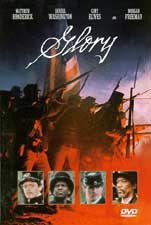 for Morgan Freeman's fatherly character trying to keep him in check? If the casting directors hadn't
plugged a veteran like Morgan or the scribe hadn't allowed for Morgan's character, Denzel may not have won
an Oscar. The obvious real life working-relationship comparison is what would Kobe do without Shaq and
what would Shaq do without Kobe?
for Morgan Freeman's fatherly character trying to keep him in check? If the casting directors hadn't
plugged a veteran like Morgan or the scribe hadn't allowed for Morgan's character, Denzel may not have won
an Oscar. The obvious real life working-relationship comparison is what would Kobe do without Shaq and
what would Shaq do without Kobe?
Maybe they both would stop rapping.
- 4. If you want to create memories, aerial shots work very well.
- For some strange reason, films with really memorable aerial shots seem to convey a since of freedom and "anything
can happen" to the moviegoer. Think of the "Thomas Crown Affair" and how the air-glider scenes worked to
perfection in making Brosnan's character more trustworthy and invincible. It also proved to heighten the
attraction of his love interest and of course the audience follows right along. For other films that
hit-hard with aerial views, see "Black Robe," and any film with Africa in the title. Aerial shots
of the motherland are unforgettable.
5. The Script is King.
- The rule is bad actors can look good with a great script. Mediocre actors will hold their own
with a great script and excellent actors with a great script will win awards. Kevin Spacey did not win
an Oscar for his acting in "American Beauty," he won the award because the script was flawless.
See previous editorials
|