|
About | Features | Reviews | Community | Screenings | Archives | Home |

December 2007
REVOLVER
An Interview with Jason Statham |
| (December: Main Page * Features * Reviews * Screenings * Teen ) Current Issue * Archive |
|
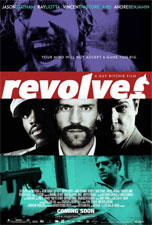
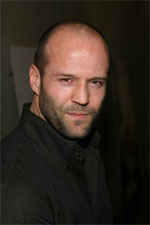
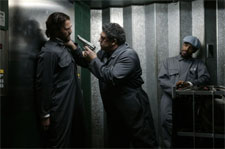
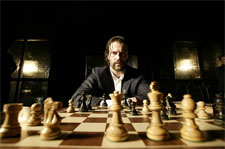
December 17, 2007 Jason Statham Makes Heady Turns in "Revolver" With these two films, Statham seemed to portray beautifully characters right out of London's criminal underground. Since then, he's proven himself to be quite an action star with films like "The Transporter" and "Crank," where he has also displayed some serious In "Revolver," Statham plays Jake Green, a long-haired, just out-of-jail conman, gambler, and chess master whose taste for revenge becomes a life-altering path to enlightenment when he is rescued from a mob hit by two enigmatic loan sharks (played by Vincent Pastore and Andre Benjamin). "Revolver" is Statham's third time around with Ritchie, who has directed a film that delves far deeper dramatically, emotionally, and artistically, than their previous collaborations offering a complex philosophical vision far different than most films based on the gangster mythos. Statham delivers a tour de force performance in a very strange film with an intensity previously unseen in his other stories. You've done three movies with Guy, but there was a gap of a few years between "Snatch" and "Revolver." How was it working this time around; was anything different this time? JS: I had just come from "Transporter 2" in Miami, literally had a week off, flew back to London and started on "Revolver." So from one movie to the next, it was completely different. Guy has not changed anything from the way he directs, even the people he used. It was the same bunch of people, the same DoP, the same sound technicians… it was like an old band getting back together playing a few of the old songs, you know? You've done three movies with Guy, but there was a gap of a few years between "Snatch" and "Revolver." How was it working this time around; was anything different this time? JS: I had just come from "Transporter 2" in Miami, literally had a week off, flew back to London and started on "Revolver." So from one movie to the next, it was completely different. Guy has not changed anything from the way he directs, even the people he used. It was the same bunch of people, the same DoP, the same sound technicians… it was like an old band getting back together playing a few of the old songs, you know? Was it easy to get back into that world? JS: Yeah, it was such familiarity, with all these faces that you know. But Guy has got such an easy way of directing. It's serious and then it's not. He gets the job done and then we have a bit of fun too. I particularly like the experience of working with someone who can change dialogue as we go, if it doesn't sound quite right, 'No don't, say this.' It is a great relief being in the company of someone who can do that, who can give you quality changes on the spot. So it's great, we have a great understanding of working together now. Of the Guy Ritchie films that you've been in, which one is your favorite? JS: Well you might be surprised that this is my actual favorite. But it's hard to say, because I've got such a fond memory of "Lock, Stock..." because it was the first movie I ever did. So I feel that that is the most charming. Snatch was the funniest, and I had such a great experience on it, I met Brad [Pitt] and Dennis Farina, and Benicio Del Torro who are all these Hollywood people coming to London, it was like, "Geez, this is amazing.' So I have such a fond memory of those two. And yet this was such an ambitious, personal movie for Guy, and I know Guy so well, that this meant so much to me too. So I can't really pick and choose, they all have their own significant importance to me. You have a lot more experience now as an actor; how do you see yourself as having changed? JS: "Revolver" has just given me a completely different perspective on life itself. And it's been really life changing for me. And I think it can be for anyone if they want it to be, if you want to look through this pair of binoculars that this can allow you to. It can really be something else. And not to take that too seriously, like we want to sell something that will change the world or whatever. It's not that way. But as an actor, I've done a few films now and I've learned about… you know, where to stand… Every movie you learn something new, something different about yourself, and you gain more confidence, and I don't think there's any substitute for experience. You have to live it and feel it to become a better actor, and I've come all this way. Ten years now I've been acting. And I never thought I'd do another film after "Lock, Stock," it was just one of those movies I'd get to show the kids and say, "Your dad was an actor once." And it did really well, and got me another part, and more and more, and next thing you know I met Luc Besson and all of the sudden I'm throwing punches and driving cars and living the dream. In the movie your character talks about rules of the game. Which one do you think is the most important rule? JS: [Pause] I think that one is, "The opponent will always hide in the very last place you will ever look." There's no such thing as an external opponent. It's all upstairs. How much did you improvise in this film? JS: Pieces, not tons. The elevator stuff, yeah, a ton of that. But not a lot. On the other films more so, but this one was less improvised. But there's always room for it, I'm trying to recount, it's been quite a while since we made it now. And I always forget about the improvising stuff. But he's got stuff where you can throw in lines here and there, and sometimes they stay in, and sometimes they don't. You just do it to make him laugh, really. Did Guy draw inspiration from your own games of chess? JS: Yeah. The game of chess was so relevant. We played daily. Every day. Who won? JS: I won a few and he won a few. But I'd say in the end, total, he won more than me. You look quite different in this film. JS: [Laughs] Yeah, it's funny to adopt a bit of head hair. It's fun. Weird pair of shoes too. JS: Nasty shoes, with see-through socks. It was a specific look that Guy was very particular about. You had a great dynamic onscreen with Andre and Vincent. What was it like, the three of you working together? JS: Yeah, a very unusual trio. It was funny because Andre was learning how to play the saxophone, he was driving everybody mad. I was trying to stuff that thing in the cupboard. But Vinnie is Big Pussy, we know him from The Sopranos, and it's like, you want to work with a wiseguy, you work with Big Pussy, you know? So yeah, I was really happy. Q: I though Andre was very good too. JS: Very good. So smooth, so calm and collected. And such a good choice, you'd never think to put him in there as that…. He's a great actor. Very confident. Very cool. Page 1 | Page 2 |
| (December: Main Page * Features * Reviews * Screenings * Teen ) Current Issue * Archive |
 |
|
Terms of Use
| Privacy
Policy Copyright © 1999-2007, BlackFilm.com
|