
|
|
About | Features | Reviews | Community | Screenings | Archives | Studios | Home |

October 2006
SHOTTAS An Interview with Director Cess Silvera |
| (October: Main Page * Features * Reviews * Screenings * Teen ) Current Issue * Archive |
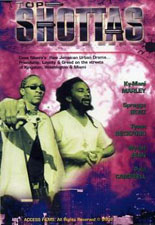
October 30, 2006 It’s very rare and almost unheard of for a film to get theatrically released after it had been released in the bootleg market some years before. Not only that, but the film wasn’t even released on DVD, yet so many people have seen it or own a copy. The film, “Shottas”, had its world premiere at the 2002 Toronto International Film Festival, but was never released, that is, until this year. For his debut film, director Cess Silvera brought in some of music buddies, reggae recording artist Kymani Marley and Jamaican dancehall start Spragga Benz to play ruthless Jamaican gangsters (Shottas), Biggs and Wayne, and also brought in Wyclef Jean (also his film debut) in a supporting role as well as executive producer. The heat is on to put an end to the cycle of crime and violence, and a local politician, in exchange for his life, arranges to buy visas back to the States so Biggs and his crew can re-establish themselves in Miami. The growing body count from warfare instigated by their powerful return to the Miami scene carries a heavy burden, a burden that only a SHOTTAS can bear… Silvera had previously ran a record label, Lanimirc Records, and owned a trendy South Beach restaurant when he wrote the script on a laptop that had original belonged to Russell Simmons (of Def Jam) at one point. In speaking to blackfilm.com, Silvera talks about the long-awaited film people have been dying to see on the big screen and its eminent sequel. Why has it taken so long for the film to come out in theaters? Cess Silvera: You know what? The whole world has been asking that question and we still haven’t got the answer yet. It’s been baffling to everyone because with the buzz the movie had for four years, I just cannot imagine why no one had jumped on board before and said, “Let’s put this movie out.” Give thanks that it’s finally happening. How is it that a number of folks have seen this movie or own the bootleg vers CS: Yeah, a lot of folks have it. It’s in every barbershop and every beauty shop. Let me tell you a story. I’m in Capetown a couple of years ago and I’m walking down the street and some guy heard my accent and heard me talking and was this bootleg movie on the sidewalk. Apparently, he realized that I’m Jamaican, and was like, “Hey my friend, I have the best Jamaican movie for you” and I was like, “What movie is that?” and he said, “Shottas”. He was selling me for 20 in Capetown. There are people who thought that the film was actually released in theaters. Was it ever released in theaters? CS: It was never released in theaters or on DVD. So, how did the bootleg get out in the streets? CS: While we were scoring the movie, and Wyclef Jean was scoring the movie, some accident happened where a VHS copy went missing from the studio and three days later it was wild fire all over. It spread everywhere. In going to the concept of the film, why did you decide to make a gangster film? CS: I decided to make this movie because I wanted to touch on a lot of different issues. I’m a big fan of gangster films as you can tell; from the Italian mobster films to the Jewish gangster like Bugsy Siegel and then you have Francis Ford Coppola and Martin Scorsese and their films. I love every one of them. We have never seen a Jamaican gangster flick and Jamaican are some of the ruthless gangsters in America. I just wanted to show how Jamaican ga Do you think your film is different from other gangster films you’ve seen in the past? CS: I think it’s different when you realized that it’s not about sex and dance, but really gory and bloody and this is how the shottas that I know, the gangsters that I know, and many are not here today, and this is how they get down. The difference is the language and the music. Jamaica is not a paradise sort of speak. When people think of Jamaica, they think of sunshine and beaches. Over the years, certain cultures would come out of gangster stories, and I wanted to show that there’s another element to it and music is a part of it. None of the characters in the film have an ounce of remorse in them. Do you want the audience to any one of them? CS: I think the audience will root for people. As cold as the characters are, specifically Wayne and Biggs, with Biggs played Kymani Marley, and as brutal as they are, there are moments when the audience falls in love with them because of the brotherhood and the loyalty between them. There are people who tell me they were saddened by the outcome to one of the characters. These are not nice guys, but there are certain elements that stitch them together where everyday life is admired by just living. Rather than show just one good guy and one bad guy, and within all the madness and the bad things, there are still elements that can be admired and can be attractive with these characters. How did you end up casting Kymani Marley and Spragga Benz in the lead roles as well as Wyclef Jean in a supporting role? CS: I was a little lucky, being at the right place and time. Wyclef and I have been friends for many years, over ten years. Kymani Marley and I grew up in Miami. Spragga Benz’s manager at the time and I went to high school together, so it having access to these people because of my connections. Had these guys acted before? CS: No, the only person that had ever acted was Paul Campbell, who played Mad Max. He’s a trained polished actor. Other than that, it was the first time for everyone, including Wyclef. None of these guys had acted before, but what we did was put together a cast and really had some intense rehearsals. We really took it seriously. We had hours and hours of rehearsals; so we did put in some work. We didn’t just show up on the set and not know what we were going to do. Did you have any problems with funding for the film? CS: We had the money. It was financed by me and my brother. We had the money before we decided to do this movie. We didn’t have to worry about bonding companies or studios or people who have to greenlit films. It was already greenlit. What were the challenges of making this film? CS: The only challenge given was that I was a first time director. I had never been behind the camera myself, just like many of the guys had never been on a movie set either. There were times when I had to take my time. The only person who had experience amongst my crew was my DP, so I had to take my time and learn the language. There were issues. There were challenges as far as the technical aspects and get the stuff that I know I need to achieve. I had to learn how to communicate that to my talent and to my crew. You have a lot of good music in the film. Was it easy to get the rights for its use? CS: The rights were a headache. You have to understand. My whole thing was me not having too much experience and at the time I was thinking, “Most of these artists are friends of mine”. I ca How much violence and gore did you want to show in the movie? CS: I really wanted to keep it organic. I wanted to keep it authentic, which at times could be a turnoff, but I really wanted to shock people. I wanted people to pay attention and see what’s going on. I didn’t just do a movie just to do a gangster movie, bloody, shoot-em-up, and cool and sexy. I wanted to show that this thing is reality. The area of Jamaica that I know is not where they shot “How Stella Got Her Groove Back”. There are places where the Waynes and Biggs live everyday that no one sees or talk about in the movies. The only way people pay attention is to shock them and let them know that it is this terrible and this bad out there. A little island with over three million people, Jamaica was once known as the number one place for murder per capital in the world. At the time I shot the film, Waterhouse was the number one place for murder per capital in the world. This is not a joke. Although it’s a movie they are watching, the situation is real. The only way to do it is to put it in your face. In the years since you shot this film, is there a sequel in place? CS: The last 4-5 years has been to promote “Shottas”. There were many times for me where I wanted to walk away from the movie and just give up because no one understood my mission of what I’m trying to do. It’s like fishing everyday and you can’t catch one, it makes you want to change the place where you are fishing at, but I had no where else to go, so I had to stick with it. The entire four years I was consumed with “Shottas” until I got it out and gave it an opportunity on a level plane field where it could have a chance to do what it’s going to do. I wasn’t even trying to think of anything else. Now that we finally have a deal with Sony Pictures, a limited theatrical distribution, everyone is now screaming for the sequel, so I went along and wrote the sequel and it’s been greenlit. We are trying to start shooting on November 10th of this year, but due to a lot of scheduling conflict, I think we will start it early next year. Can you share some details on the sequel? CS: The sequel will be about repentance and payback. In the end of “Shottas”, Biggs Is Kymani back as Biggs? CS: Yes. Kymani is back. Is anyone else back in the film? CS: I can’t give everything away. There are a lot of surprises. Do you have any other projects lined up? CS: I have this other script with Sony called “Mad Dog”. It’s about methamphetamine in the Midwest. We are going to shoot in Iowa right after the winter time. What sort of films are you looking to do? CS: I have many different ideas because I don’t want to do shoot-em-up films. I want to do films that will move you to think. Just move you where it’s going to make a difference. SHOTTAS opens on November 3, 2006
|
| (October: Main Page * Features * Reviews * Screenings * Teen ) Current Issue * Archive |
 |
|
Terms of Use
| Privacy
Policy Copyright © 1999-2006, BlackFilm.com
|
 SHOTTAS:
An Interview with Director Cess Silvera
SHOTTAS:
An Interview with Director Cess Silvera ion of it?
 ngsters are and touch on certain social issues like the politics in Jamaica that creates a climate for young kids that don’t really have too much hope. It was many different things that led me to want to make this my first film.
 lled them and said that I will be using their music, and then I come to find out that there are three different publishing entries to the song. If one agrees to give it to me for a certain fee, the other two were indifferent to that. Clearly, the publishing was harder than shooting the movie. It was a nightmare. We got through it and still ended up with great music, and great scores. The score was done by Steve Marley. We ended up with what we really wanted in the film.
 walks away with a bag full of money, but it doesn’t stop there, there’re consequences. Every choice you make in life has an effect and his past catches up with him and it’s not pretty. Just when he thinks life is beautiful and he’s a married man with kids and there’s the church and his business, his new life is disrupted by his past. He has to make a choice; does he face up to it or does he run from it with his tail between his legs.
