
|
About | Features | Reviews | Community | Screenings | Archives | Home |

October 2004
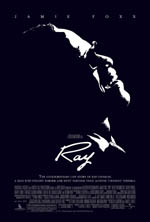
Ray: An Interview with Taylor Hackford
|
| (October: Main Page * Features * Reviews * Screenings * Teen ) Current Issue * Archive |
|
By Tonisha Johnson As this film unfolds; as you watch the direction from Taylor Hackford and the skill that actor/comedian Jaime Foxx brings and ignites on to the silver screen; your heart beats faster. Your eyes well up with water. As your hand lifts to the right side of your face; one finger holding your chin up while the other caresses the temple in disbelief, wonder, curiosity and amazement. It is so hard for films of color to get a green light. So many actors and actresses that are of quality are lost in the shuffle. And we are never privileged to know their true skill. Many Blackfilm.com readers are exposed to both sides of the filmmaking process, thru endless interviews, celebrity profiles and film reviews. And out of those readers, quite a few are potential actors and actresses, who subscribe to this black resource for industry news that includes entertainers of all colors; some looking to find an inkling that would maybe gear them towards a big break. Here, there is a voice. A voice where major and minor, Big
Box Office or Independent actors/actresses/filmmakers/directors of colo In this film, Taylor Hackford, as well as great actresses like Sharon Warren, Regina King and Kerry Washington; along with great actors like Jaime Foxx, Bokeem Woodbine, Larenz Tate, Clifton Powell, C.J. Sanders, and a flood of others that made you gasp and say ŒI know him/her" when you saw them; get the chance to use that voice. Support the voices of all those that are big and those that are small. If you as an audience green light them, then Hollywood will have to. One would have to admit that the film Ray is a serious Oscar contender. There is no question that director Taylor Hackford has taken 15 years to develop the story cast the right character to play Ray Charles, and ultimately perfect this cinematic masterpiece. It was well worth the wait. As I sat down to talk to Taylor, his eyes were all a buzz over the excitement of the release of Ray. Eager to begin, we sat down quickly and the words just flowed like water from Hackfords' lips to my paper. Any Dramatic License in this film? 90% true. 95% true. The dramatic license that I took was
rather minor. You have to understand that I collaborated for 15 years
with this film with Ray Charles. So, I did my own independent research.
I've read is autobiography. And I feel his autobiography is a difficult
story to perceive because I do tell the story from the point of view of
the artist, only. Because there are always other sides to that issue,
I went out myself and probably talked to about 35 other people who were
intimately involved in his life. And I wrote a screen story back in the
late 80s. And unfortunately it took so long to get this film financed.
Not so much that we couldn't have gotten it together to make but because
we couldn't find the money. I tried to, mys My sense was, I wanted to tell a real story. A visceral
story. When period movies are made and you kind of look through the gauze
to the past. The Ray movie is a revolutionary movie. I wanted those scenes
in those clubs to be as intense and sweaty. Ray Charles played 8 sets
a night. He had 10 minutes off and played for fifty. If he didn't get
people out of their seats and on their feet dancing, they'd throw his
ass out of there. That's what he said to me. So, I wanted to try to portray
that, but I also wanted to tell a story that was a lot more complicated
than that. This is a man, if you wanted to deal with his entire life,
you could deal with 75 years. Because all those are interesting. But I
had to make a choice. My choice is always that, you should talk about
the struggle. This is a film about life impacting art. As oppose to vice
versa. In other words, what created Ray Charles? What was involved in
making him the incredible icon that we all know? I believe that the things
that happened to him, in his life, impacted and made that work. And kind
of, in its own strange way, it's a musical. Because the songs in the picture
are pretty much in chronological order. I tried to take what happened
in his life and showing how that music came out of those experiences.
And I think there is one song that is out of order. And that's Hard Time,
which is at the very end of the film. So most of the other things are
actually in the chronological order as they are depicted in the film.
Is every detailed nuance of Ray Charles' life and sin in this picture?
Of course not. You can't. But, he gave me a huge gift. He said "Taylor,
you know, I'm no angel. And I don't need to have myself depicted as such.
Just tell the truth." And that is an incredible gift. So, if you want
to point out the inaccuracies, I will deal with them. I'd be happy to.
But I stand by the picture. It's true and real, I believe, within the
context, of what I as a filmmaker, decided to tell. And I have certain
limitations because of time, because of whatever. But, I pretty Being aware of his illness, did you feel a sense of urgency to get this film out there before he passed away? No. Yes, I was aware that he was ill. It was very apparent
as time passed. Now that I look back I start to realize that he probably
was aware of his illness, probably 3 years ago when I was just getting
the film pre-produced and ready to go, to shoot. We were in the studio
together. Again, the music of this film is used in various ways. I was
blessed with the fact that Ray Charles was recorded by Tom Dowd. Who was
the greatest engineer of his generation at Atlantic Records. So, in 1953
when he's recording "I Got a Woman", I'm using "I Got a Woman" in this
picture. Do you know how unusual that is? That presents certain problems
on its own. We did a little bit of enhancing when you cut to the horn
section. You'll hear the horns more, we did that. And ultimately I was
blessed on that level. When Ray had been traveling with Lowell Fulton,
Fulton had not been recorded well. So Rays' guys said ŒRay, do you think
you might be able to give me a name of somebody who might be able to arrange
these things to work?" And Ray said, "I did the arranging, why don't I
do it." I mean, incredible. So Ray went into the studio and he played
the piano. In that sequence when you hear Jaime alone in the bar and the
band has left with the girls and he's left there alone; trying to portray
the loneliness of this man. Basically, however brilliant he is, Ray Charles,
however many woman, how huge the audience response he still returns to
the same place; he's alone in the dark. And I wanted to portray that in
this film. So, in that instance, I'm sitting in the studio, describing
him how he's having trouble with Lowell, Wilbur screwing him over money;
the band is kind of going out, leaving him there. These are the moments
leading to his heroin addiction. These are the moments that he's talked
about as the pain of being on the road and not even knowing where he was.
And I'm describing it to him and I want you (Ray) to sit at the piano
playing this quiet, contemplative number. And he does something that is
very beautiful. And I say Ray? And he says, "Well, what do you think of
that?" I say Ray, to be honest with you, I think it's great. But it sounds
like your playing for a bunch of people. This is you alone, in this place,
playing from your heart from yourself. And his response was kind of What experiences did you take from working on music films like La Bamba to Ray? Music has always been an important thing to me in my life
and understand I've worked in the music business. And trying to understand
the real nature of musicians and real musical creations. Clearly those
are other pieces of work that related to the same field. This to me is
a much more substantial piece because you have to watch how these things
are created. And I was dropping You've taken 15 years to put this movie together. Was it because you were waiting for the right man to play Ray? I think you hit it. I don't know who I would have cast if I had made the film originally in the late 80s. You live or die when you make a biopic by the person who plays the role. Jaime Foxx is the man for this. I can't imagine anybody even coming close to what he does. His level of commitment; it's a great experience from the point of view of the director. I can give an actor tools to prepare themselves for the role. But they've got to pick them up and use them. And Jaime from the very beginning, we just fused this partnership. It was a fantastic experience. The man's commitment was total. I asked him to do the role blind. He said fine. A lot of actors would go, yeah that'd be cool, I'll experiment with that. Maybe I'll do a half day and kind of feel what it's like. I asked Ray to take his glasses off and let me photograph his eyes. And he did. And we made prosthetics to look exactly like Ray Charles' eyes. And you put them on. And they cover, it just glues on. Jaime had to be led. You never touch Ray. He grabs you by the arm and you just lead him in a very light way, whatever, and I would lead Jaime onto the set. He had people with him and help him take him to the bathroom. I mean, this was a commitment that was total. I made the choice that we had to use Ray Charles once he finds himself when he's imitating the acting cold, that's Jaime. Jaime is fabulous. I didn't know at the beginning, but I do know now, I learned very quickly; he's a consertment musician. He went to university on a piano scholarship. But, I wanted to use Ray Charles; these are masterpieces. You don't mess with masterpieces and I used the real stuff. That means that Jaime Foxx has toŠbut, in today's world you record the vocals and the piano track separate. You could flip it if it's out of sync. These are monaural till 1959, everything in this. In that one sequence in I Believe to My Soul, you see, Tom Dowd had the first 8 track. Up till then, everything is monaural. So, Jaime Foxx can't be flipped. You can't take the vocal and flip it. And I'm going from his fingers on the keys to his mouth and back down. You know what a gift that is to a director, if you're doing a musical? And for you as an audience looking at it going, I know this is bullshit. You know, show me in this film where Jaime Foxx is out of sync? You're not going to find it. And learning those piano parts; Ray Charles is not somebody who goes, IŠAMŠ; no. It was all singing off the note. That's what Ray did. So whatever his hands are doing, his vocals are doing differently. Jaime had to learn both those things simultaneously. It was an incredible gift. But I think we are all aware of great artists and we all see them in different ways. You never know how great somebody is until they have a role. African Americans in this community don't always have these great roles. And this was one that I reallyŠI chose Jaime. I introduced him to Ray and Ray put him through his paces. And ultimately after being really tough on him, he got up and hugged himself and said "this is it, this is the kid." Ray anointed Jaime himself. I watched Jaime grow from whatever his regular height was, till about 10 feet, right there at that moment. But there are those moments that ultimately say, the man himself said you could do it. Then there is that responsibility and that pressure that said Jaime was going to do it. And he was just great. In the early part of the film, Ray fell victim to money scams, where he wanted to be paid in singles. Do you think that was still a concern for Ray as he became wealthier and more successful? Oh yeah. The thing that is interesting about Ray Charles is that in all the drama to the Jeff Brown to the Joe Adams syndrome, it's all real, it all happened. And Joe Adams is a very smart guy. But Ray Charles never had a manager in his life or a lawyer in his life that was leading the band. He did it himself. Little bits and pieces, I tried to put in there. Cause he told me, the first gig he had, some guy said 5, 10, 15, 20. He goes with 20 bucks and puts it down and says "Can I you take $5 dollars for a room?" And the guy says sir that's going to take 5 of those. And he says "that's five bucks?" And the guy says "no it's not. It's one." Those kinds of rip-offs, you learn. And the late Ray Charles learned; getting paid in singles, to ultimately making million dollar deals. He was just that kind of mind. He was a pretty interesting pragmatic guy. I think he is one of the smartest guys I've ever met. There's no question about it. And he was fantastic to deal with. But he always had his eye on the bacon. He was performing, he knew what he had. But with his momma, he learned a lesson. He almost took it too seriously; stand on your own feet and don't be dependent on anyone. And I believe, seriously, that's what he did. There was no puppet master behind Ray Charles. |
| (October: Main Page * Features * Reviews * Screenings * Teen ) Current Issue * Archive |
 |
|
Terms of Use
| Privacy
Policy Copyright © 1999-2004, BlackFilm.com
|
 r
can be seen and heard, by you, the reader.
r
can be seen and heard, by you, the reader.  elf,
findŠyou know when you meet Ray Charles, I didn't know what to expect,
and I went to talk to Ray Charles Jr. to try to convince him to give me
the rights. The man walks into the room, alone. No cane, no seeing-eye
dog. Walks around 5 obstacles, walks up to me and says "Hey Taylor; Put
some skin in the pocket." And then he walked away from me, walked around
4 or 5 more things, sat behind his desk and said "did you see the Lakers
last night?" "Could you believe that 3 pointer shot Magic shot at the
end of the game to win it?" SEE. SEE. You know, this is Ray Charles. So
controlling of his own environment. Invincible. I initially thought the
man could see. He's perpetrated one of the biggest hoaxes ever, on the
worldŠlol. But of course, he had both eyes taken out. The man could not
see. They give you an indication of how in control he was. If you want
to have an interpretation of a straight ahead traditional biopic, that's
fine.
elf,
findŠyou know when you meet Ray Charles, I didn't know what to expect,
and I went to talk to Ray Charles Jr. to try to convince him to give me
the rights. The man walks into the room, alone. No cane, no seeing-eye
dog. Walks around 5 obstacles, walks up to me and says "Hey Taylor; Put
some skin in the pocket." And then he walked away from me, walked around
4 or 5 more things, sat behind his desk and said "did you see the Lakers
last night?" "Could you believe that 3 pointer shot Magic shot at the
end of the game to win it?" SEE. SEE. You know, this is Ray Charles. So
controlling of his own environment. Invincible. I initially thought the
man could see. He's perpetrated one of the biggest hoaxes ever, on the
worldŠlol. But of course, he had both eyes taken out. The man could not
see. They give you an indication of how in control he was. If you want
to have an interpretation of a straight ahead traditional biopic, that's
fine.  much
stand by everything that's there.
much
stand by everything that's there.  like,
"hey Ray Charles ain't gonna play bad for nobody." And I say, I would
never ask you to. And around the place, the musicians are over there,
their all Ray Charles' musicians and their all going Œdon't disagree with
the master here'. Now I wasn't disagreeing with him, but I have to get
my film. So, I say no Ray, I really believe Lowell was messing around
with you or Wilbur was messing around with you. The guys have left and
they always made you feel low. And he kind of went, Œfuck it'. I mean
it was like, you know, tough! So, I went well, I'll think about something
else. And as I turned my back to go out, he says, "Well, if they had done
that to me. And if I had been screwed on the money and if I was alone
and had felt that way, I might play something like this." And he just
went; bang! There it was. It was a collaboration like all collaborations.
I'm talking about one of the worlds great geniuses. And at the same time
he is trying to understand what I needed for the film. And it was a fantastic
experience. And then we role right into "Everyday I Have the Blues" that
he's arranged and he plays piano on. And Chris Thomas King, who is a fabulous
artist in his own life, who plays Lowell Fulson who sang and played guitar
on. So, you have those moments of real collaboration and closeness. I
mean, it was a life experience for me. But, getting back to your question;
I start to realize now that he probably knew he was sick, although he
was vibrant and alive and completely on top of his game. There was no
portrayal of any weakness. But that very time, he gathered all 12 of his
children from around the world, for the first time, together. And I now
realize, looking at that, what he was doing. We went to shoot the film
and when I came back I saw him and he seemed to be in fine shape. He was
there on the set with us when we were at RPM Studios in Los Angeles, he
seemed fine. But I went into the editing room and I spent about 10 weeks
to cut it and I took a rough cut to RPM to show him because he would say
he wanted to see it but he sat next to the Šand I could tell that he was
not the Ray Charles that I knew from before. And he was starting to deteriorate.
Typical Ray Charles fashion, it went about 3 months more than the doctors
ever thought possible. He was dying, dying; he'll never make it past this.
And he was proving them all wrong. And at certain point, Ray was going
to do like always, he was going to do it his way. And he's going to prove
them wrong. And of course, when it happens, it's a huge shock. Yeah, it's
painful he's not hear to see the film. But ultimately he did see the rough
cut. First thing he asked to see was, I want to see my mom, I want to
hear what you put in for my mom. That was the most important thing to
him. And he loved it.
like,
"hey Ray Charles ain't gonna play bad for nobody." And I say, I would
never ask you to. And around the place, the musicians are over there,
their all Ray Charles' musicians and their all going Œdon't disagree with
the master here'. Now I wasn't disagreeing with him, but I have to get
my film. So, I say no Ray, I really believe Lowell was messing around
with you or Wilbur was messing around with you. The guys have left and
they always made you feel low. And he kind of went, Œfuck it'. I mean
it was like, you know, tough! So, I went well, I'll think about something
else. And as I turned my back to go out, he says, "Well, if they had done
that to me. And if I had been screwed on the money and if I was alone
and had felt that way, I might play something like this." And he just
went; bang! There it was. It was a collaboration like all collaborations.
I'm talking about one of the worlds great geniuses. And at the same time
he is trying to understand what I needed for the film. And it was a fantastic
experience. And then we role right into "Everyday I Have the Blues" that
he's arranged and he plays piano on. And Chris Thomas King, who is a fabulous
artist in his own life, who plays Lowell Fulson who sang and played guitar
on. So, you have those moments of real collaboration and closeness. I
mean, it was a life experience for me. But, getting back to your question;
I start to realize now that he probably knew he was sick, although he
was vibrant and alive and completely on top of his game. There was no
portrayal of any weakness. But that very time, he gathered all 12 of his
children from around the world, for the first time, together. And I now
realize, looking at that, what he was doing. We went to shoot the film
and when I came back I saw him and he seemed to be in fine shape. He was
there on the set with us when we were at RPM Studios in Los Angeles, he
seemed fine. But I went into the editing room and I spent about 10 weeks
to cut it and I took a rough cut to RPM to show him because he would say
he wanted to see it but he sat next to the Šand I could tell that he was
not the Ray Charles that I knew from before. And he was starting to deteriorate.
Typical Ray Charles fashion, it went about 3 months more than the doctors
ever thought possible. He was dying, dying; he'll never make it past this.
And he was proving them all wrong. And at certain point, Ray was going
to do like always, he was going to do it his way. And he's going to prove
them wrong. And of course, when it happens, it's a huge shock. Yeah, it's
painful he's not hear to see the film. But ultimately he did see the rough
cut. First thing he asked to see was, I want to see my mom, I want to
hear what you put in for my mom. That was the most important thing to
him. And he loved it.  in small bits of pieces of what really happens when someone is there or
recording. And also, creating something on the road or devising. Whether
the audience gets it or not, that process of watching him busted in Indianapolis.
Coming home and sitting alone at his piano in his den, playing You Don't
Know Me; you know, that whole concept of what Ray Charles went to, when
he was in his lowest depth. He did what he loved. He went to Country Music.
This is a guy; he grew up listening to the Grand Ole Opry. He loved songs
and he loved Country Music. Ray Charles, in his own way, it's like at
the beginning, Ray Charles changed American music, not once but twice.
Totally. Back in the early 50s when he was doing I Got a Woman, he was
blasphemy. The record didn't mean anything to the white community. Because
whites weren't even listening to that. But the black community, you did
not mix Gods music, with the Devils music. At Saturday night, in the Juke
Joint, you're communing with the devil. And you go out Sunday morning,
you are dealing with God. And it's serious stuff. And there are people
who wanted to string him up! He changed it. He's the first guy to use
a 3 girl backup group. The vocal stylings of gospel and all these things.
That's what he did. So, all of a sudden, that's accepted. Now, all the
worldŠElvis does it. Now in 1962 he goes and takes basically white music,
country western, and he starts recording that. Any country western artist
and I don't care who they are today, will say Modern Sounds in Country
and Westerns is still one of the greatest country albums ever recorded.
This is a man; I was trying to portray, to answer your question, who you
couldn't define. And he justŠbecause he was blind, going back to Rays'
line when he was sent to St. Augustine', to the state school for the blind
in Florida. When he got there, there was a big fence down the middle.
And the white kids were on one side and the black kids were on the other.
And his response was, at the time, "Well, how the hell we're all gonna
know who's who? We're all blind." And I think that was one of the things
that was Ray Charles great gift. I never found any; any black person has
room for resentment in real life. Ray Charles was just a guy who didn't
have any. Ray Charles was just a guy who was proud of who he was. If you
looked at his organization it was almost entirely African American, but
he didn't hold any rank. He just was there and did what he did, sang what
he felt did what he did, related to you in that way and those are the
things that I was trying to portray in it.
in small bits of pieces of what really happens when someone is there or
recording. And also, creating something on the road or devising. Whether
the audience gets it or not, that process of watching him busted in Indianapolis.
Coming home and sitting alone at his piano in his den, playing You Don't
Know Me; you know, that whole concept of what Ray Charles went to, when
he was in his lowest depth. He did what he loved. He went to Country Music.
This is a guy; he grew up listening to the Grand Ole Opry. He loved songs
and he loved Country Music. Ray Charles, in his own way, it's like at
the beginning, Ray Charles changed American music, not once but twice.
Totally. Back in the early 50s when he was doing I Got a Woman, he was
blasphemy. The record didn't mean anything to the white community. Because
whites weren't even listening to that. But the black community, you did
not mix Gods music, with the Devils music. At Saturday night, in the Juke
Joint, you're communing with the devil. And you go out Sunday morning,
you are dealing with God. And it's serious stuff. And there are people
who wanted to string him up! He changed it. He's the first guy to use
a 3 girl backup group. The vocal stylings of gospel and all these things.
That's what he did. So, all of a sudden, that's accepted. Now, all the
worldŠElvis does it. Now in 1962 he goes and takes basically white music,
country western, and he starts recording that. Any country western artist
and I don't care who they are today, will say Modern Sounds in Country
and Westerns is still one of the greatest country albums ever recorded.
This is a man; I was trying to portray, to answer your question, who you
couldn't define. And he justŠbecause he was blind, going back to Rays'
line when he was sent to St. Augustine', to the state school for the blind
in Florida. When he got there, there was a big fence down the middle.
And the white kids were on one side and the black kids were on the other.
And his response was, at the time, "Well, how the hell we're all gonna
know who's who? We're all blind." And I think that was one of the things
that was Ray Charles great gift. I never found any; any black person has
room for resentment in real life. Ray Charles was just a guy who didn't
have any. Ray Charles was just a guy who was proud of who he was. If you
looked at his organization it was almost entirely African American, but
he didn't hold any rank. He just was there and did what he did, sang what
he felt did what he did, related to you in that way and those are the
things that I was trying to portray in it.